Monday, 18 August 2014

Seating And Body Style
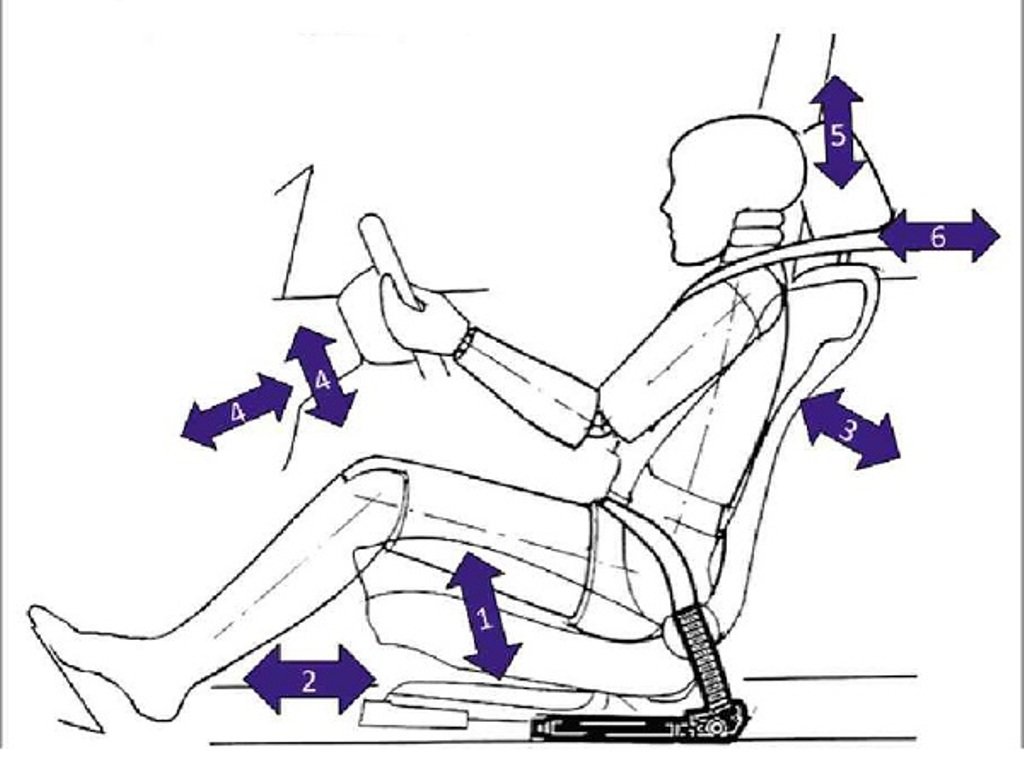

Most automobiles are designed to carry multiple occupants, often with four or five seats. Full-size cars and large sport utility vehicles can often carry six, seven or more occupants depending on the arrangement of the seats. In the other hand, sports cars are most often designed with only two seats. The differing needs for passenger capacity and their luggage or cargo space has resulted in the availability of a large variety of body styles to meet individual consumer requirements that include among others, the sedan/saloon, hatchback, station wagon/estate and mini van.


Environmental Impact


Noise

Vehicle affect the enviroment by creating noise :
  • Noise can cause or bring about disturbance to work,relaxion and sleep .Mental stress and in severe cases pyshical problem. such as chronic exhaustion ,high blood pressure and heart disease
User of resources 
The manufacture,operation and maintenance of vehicles impacts the enviroment by using non-renewable resources such as:

  •  Metal
  • Petroleum (for plastic and fuel)
  • other fossil Fuels 
This affect rhe enviroment as follow

  • Resources are infinite,so we should use them wisely
  • Disposing of product at the end of their  life can cause damage.
Ozone Depletion
Austalian legistaion bans the manufacture and importation of Chlorofluorocarbons(CFCs),an ozone depleting substance that was once widely used in car conditioners.Their replacement gases ,hydrofluorocarbonss(HFCs) and hydrocarbons (HCs) do not damage the ozone layer .They do have a greenhouse affect.To avoid leaks of air conditioning gases,keep units maintaned and follow instruction in the owner's manual
Ozone in the upper atmosphere protects life on earth by absorbing ultraviolet (UV) radiation from the UV radiation is linked to UV radiation linked to skin cancer,genetic damage and immune system suppression as well as reduced productivity in agritual crops 
 

Saturday, 16 August 2014

Mass Production

Ford Model T assembly line
Henry Ford designed his first moving assembly line in 1913 and revolutionized the manufacturing process of his Ford Model T.
This assembly line, at the first Ford plant in Highland Park, Michigan, became the benchmark for mass production methods around the world.
Mass production of the Volkswagen Beetle began in Germany after WWII. The car was sturdy and reliable and it became the symbol of West German economic miracle. After the deprivation of war, the nation was enjoying its new found freedom and taking off on holidays as often as possible.

Volkswagen Beetle assembly line

History of Automobile

Benz Patent-Motorwagen
Three wheels one cylinder and instead of a steering wheel, a crank handle. The Benz Patent Motorwagen has gone down in our history as the world's first car. Karl Benz set the first vehicle with a combustion engine patented in 1886 and although it was widely seen as the great feat of engineering, it was a financial flop. That was until the inventor's wife Bertha Benz drove it over 100km from Mannheim to Pforzheim proving that however how odd it looked, it could go the distance. It went down in history. It was constantly breaking down. The brake pads had to be replaced and you have to keep stopping to fill it up. Cars might have been invented in Germany but it was actually France that first fell in love with them. Including the ones made in Germany. Women in particular like to motor down the boulevard of Paris. It made a change from horse drawn carriage. It was a way of showing how modern you were because obviously a motor car cost a lot more than a horse drawn carriage.
Karl Benz
Bertha Benz


Here is Top Gear take on searching the first car 
with modern controls and steering.

Tuesday, 5 August 2014

The Launch of RAIHAN blog


R - Rahim
A - Alif
I - Ika
H - Hariz
A - Amalina
N - Nisa